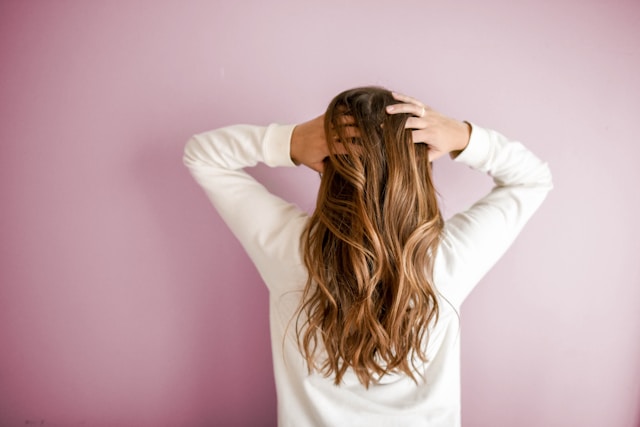
Most people think hair loss is just about genetics or stress. But if you’ve been losing more hair than usual, or your strands feel thin and brittle, your diet (specifically your protein intake) might be quietly working against you. Hair is almost entirely made of protein. So when your body doesn’t get enough, your hair is often the first thing to pay the price.
Why Protein Matters So Much For Hair
Hair is made up of a structural protein called keratin. Every strand that grows from your scalp is essentially a chain of amino acids that your body has assembled from the protein you eat. When your diet is low in protein, your body enters a kind of triage mode – it redirects available protein to organs and functions it considers more critical for survival. Hair growth gets deprioritized.
This is why protein deficiency doesn’t just slow hair growth. It can trigger a specific kind of shedding called telogen effluvium, where a large number of hair follicles shift into the resting phase at the same time. The result is noticeable, diffuse hair fall that can start two to three months after the deficiency begins, which is why many people don’t connect it to their diet at all.
How Much Protein Do You Actually Need?
The standard recommendation you’ll find in most health guidelines is around 0.8 grams of protein per kilogram of body weight per day. But this number is a baseline, meant to prevent deficiency, not necessarily to support optimal hair growth, muscle maintenance, and tissue repair all at once.
For most adults, a more realistic target for hair and overall health lands somewhere between 1.2 and 1.6 grams per kilogram of body weight daily. If you’re physically active, recovering from illness, or dealing with significant hair loss, your needs may sit at the higher end of that range.
The challenge is that most people have no real sense of how much protein they’re actually eating each day. A bowl of dal, two eggs, and some curd might feel like a protein-rich day, but depending on portion sizes, you could still be falling short. Using a protein intake calculator can help you get a clearer picture of your actual daily intake based on your weight, activity level, and health goals, which is a much better starting point than guessing.
Quality Of Protein Is Just As Important As Quantity
Not all protein sources are equal when it comes to hair. Your body needs what are called essential amino acids – the ones it can’t make on its own. Animal-based proteins like eggs, dairy, fish, and chicken contain all essential amino acids in one source. Plant-based proteins often don’t, which means vegetarians and vegans need to be more intentional about combining sources throughout the day.
A few protein sources particularly useful for healthy hair include:
- Eggs – contain both protein and biotin, which supports keratin production
- Lentils and legumes – good plant-based protein with added iron and zinc
- Greek yogurt – high in protein and also supports gut health, which affects nutrient absorption
- Fatty fish like salmon – protein plus omega-3s that support scalp health
- Nuts and seeds – useful as complementary sources, especially pumpkin seeds for zinc
When Protein Alone Isn’t Enough
Here’s something that often gets missed: you can eat adequate protein and still have hair loss if your body isn’t absorbing it properly. Poor gut health, low stomach acid, chronic stress, and deficiencies in cofactors like zinc, iron, and vitamin B12 can all interfere with how well your body uses dietary protein.
This is the kind of complexity that hair care brands rarely talk about. Traya takes a more layered approach to this, looking at root causes that include nutritional deficiencies, hormonal imbalances, and scalp health together, rather than treating hair fall as a single-cause problem.
Final Thoughts
Protein is foundational to healthy hair, but it works best as part of a bigger picture. Start by understanding your actual intake, not just assuming it’s fine. Pay attention to source quality, not just quantity. And if you’re eating well but still losing hair, consider that the issue might be absorption, hormonal, or something else entirely that needs proper evaluation.
Hair loss is rarely about just one thing. But protein is almost always worth looking at first if you want healthy hair.